The Midday Reset: Why a 20-Minute Lunch Workout Beats the Evening Gym Plan You Keep Cancelling
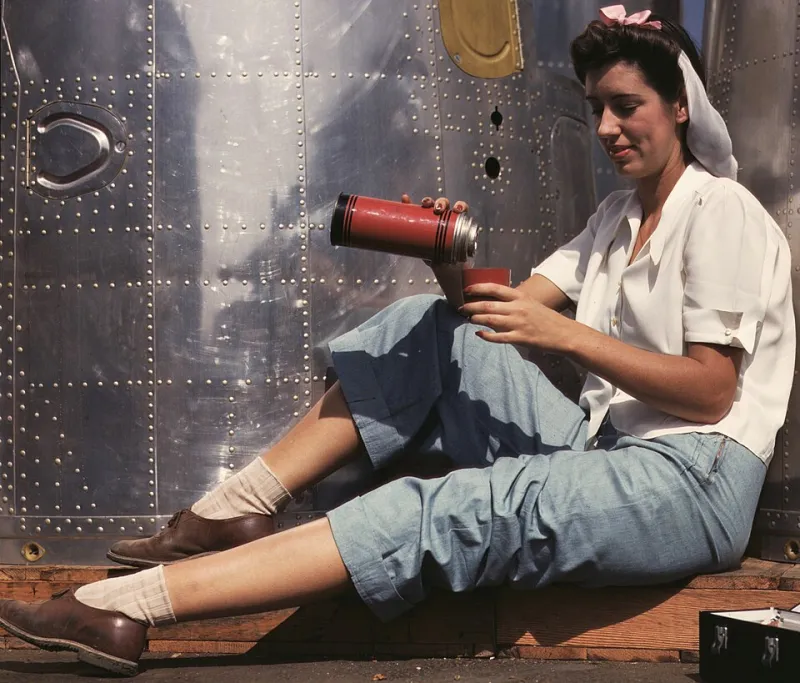
Photo: Alfred T. Palmer, Public domain, via Wikimedia Commons
The six o'clock fantasy
It is 5:47pm. Your gym bag is under the desk, your last meeting has overrun, and the train home is already showing delays. You had planned a 75-minute session. You will probably have a cup of tea and a biscuit instead.
That is not a character flaw. It is logistics. For a lot of UK desk workers, the evening workout is a lovely idea that requires the rest of the day to go perfectly. A lunchtime session only requires you to leave your chair for half an hour.
Why the evening slot keeps losing
Evening training is competing with almost everything: the commute, picking up kids, making dinner, the gym being packed at 6pm, and the small matter of it being dark before you even leave the office in winter. By the time you get home, the idea of changing into gym kit and going back out again has very little appeal.
The evening plan also asks you to make a decision late in the day, when your willpower is already tired. The lunchtime plan is simpler. You packed the bag the night before. You walk to the gym. You do 20 minutes. You come back.
The midday advantage
A short lunchtime session is not a compromise. It is often more repeatable, which is the only thing that really matters. Two 20-minute sessions every week will do more for your fitness than one ambitious evening session every fortnight.
There is also the daylight factor. Getting outside or even just walking to a nearby gym in the middle of the day helps break up the sedentary stretch. You come back to your desk with a clearer head, not just a smug feeling that you have done something virtuous.
The gym is usually quieter at midday too. You are less likely to be waiting for a squat rack or queuing for the changing room. For a desk worker with a 45-minute window, that matters.
The 20-minute reset circuit
This is a straightforward full-body circuit. It works with dumbbells, a bench and a bit of floor space. Do it twice a week, ideally with at least one rest day in between.
Warm up for three minutes: brisk walk, arm circles, bodyweight squats and a few hip hinges. Keep it simple.
Then complete three rounds of the following, working for 40 seconds and resting for 20 seconds between exercises:
- Goblet squat
- Incline press-up with hands on a bench
- One-arm dumbbell row — 20 seconds each side
- Reverse lunge, alternating legs
- Dumbbell Romanian deadlift
- Plank
Rest for 60 seconds between rounds. Finish with two minutes of easy walking and a few gentle stretches.
If you are new to training, use lighter weights than you think you need. The aim is to finish feeling like you worked, not like you need a lie-down in the stationery cupboard.
Kit, showers and not being the smelly one
Pack your bag the night before. Use a small gym bag with a separate compartment for shoes, a quick-dry towel, deodorant, wipes and a spare top. Keeping a second pair of trainers at work is a small move that removes a big excuse.
If your gym has showers, use them. If it does not, use body wipes, change your top and give yourself a quick once-over. Avoid heavy aftershave or perfume in a shared office. Everyone will thank you.
Keep the changing room routine short. Do not take calls in there, do not leave wet towels in your desk drawer, and do not be the person who microwaves fish after a workout. These are the real rules of office fitness.
Making it fit a real working day
Put the session in your calendar as a proper appointment. Tell your team you will be away from your desk between 12:00 and 12:45. Most people will not care, as long as they know when you are back.
Choose a gym within a five- to ten-minute walk if you can. The longer the journey, the more likely the session becomes a logistical project. If you cannot leave the building, keep a resistance band and a simple bodyweight routine as a backup.
Eat afterwards. A supermarket meal deal, a prepped lunch or a yoghurt and a banana is fine. Do not skip lunch entirely and then wonder why you are raiding the biscuit tin at 4pm.
Start with two sessions a week. Not four. Not five. Two is enough to build the habit. Once that feels normal, you can add a third if it genuinely fits.
The bottom line
The best workout is the one you actually do. For a lot of UK desk workers, that means a 20-minute lunchtime reset, not a grand evening plan that collapses the moment the train is delayed. Keep it short, keep it repeatable, and let consistency do the heavy lifting.