The School-Run Strength Club: A Pram Plan for Parents Who Can’t Wait for Crèche Space
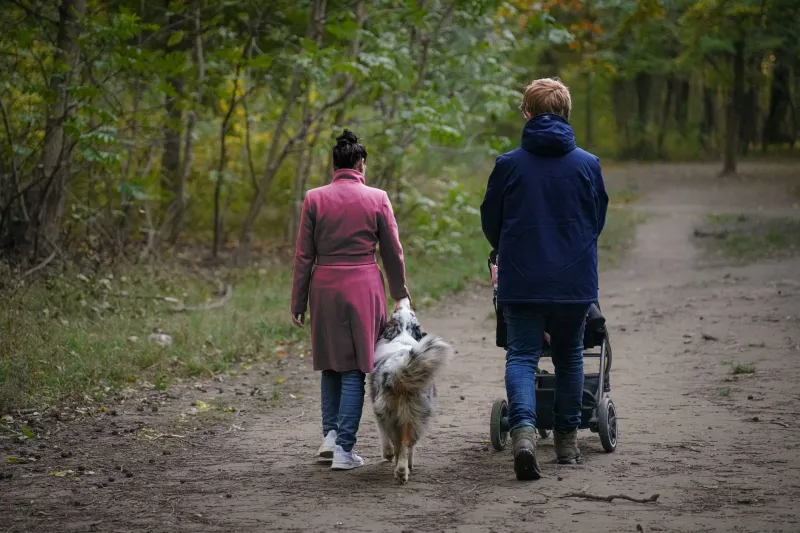
Some workouts need a clear diary, a quiet gym floor and a small miracle. Parenting rarely offers all three. The crèche slot you wanted is gone, the nap has moved by forty minutes, and someone has arranged a soft-play party right where your leg session used to be. So rather than building a plan around the gym’s timetable, build one around the pram. It is already there, it has a brake, and it can carry a water bottle and a spare nappy.
This is not about turning every walk into a bootcamp or pretending a toddler’s snack break is a rest interval. It is about using the movement you already do — the school run, the park loop, the trudge to the shops — and adding enough structure to make it count as strength work. Four weeks, three short sessions, and a bit of British weather common sense.
Why the pram beats waiting for the perfect slot
The gym crèche is a brilliant thing when it works. It just does not work on demand. Between illness, settling-in sessions and the fact that babies refuse to follow booking systems, relying on one fixed hour can leave you training once a fortnight. The pram plan is less glamorous but far more repeatable. You are not adding a commute. You are not paying for childcare. You are not negotiating with a receptionist about whether the buggy can come past the turnstiles.
There is also a useful strength principle hiding in plain sight: loaded walking. A pram with a growing baby, a changing bag and whatever else has been stuffed underneath is a movable weight. Add in bench presses, step-ups and carries, and you have a session that trains legs, glutes, core and upper body without a single machine.
The four-week framework
Do three sessions a week. They do not need to be on set days. One can be the walk to school or nursery, one can be a park loop, and one can be a ten-minute garden or living-room session while someone is happily occupied. Keep each session to 20–30 minutes, including the walking. If you only manage two, that still counts.
Week one: find your anchors
- Walk with purpose (10–12 minutes): Push the pram at a brisk but safe pace. Use the first five minutes to warm up, then add two short faster stretches where the pavement is clear.
- Bench sit-to-stands (2 sets of 8): Use a playground bench or a low wall. Sit down slowly, stand up without using your hands. Keep the pram brake on and stand beside it, not in front of it.
- Step-ups (2 sets of 6 each leg): Use a low step or a sturdy kerb. Hold the pram handle with one hand if you need balance.
- Pram push-and-hold (2 rounds of 20 seconds): Find a gentle slope or a flat stretch. Push steadily, then hold the pram still while you brace your middle. This is not a sprint; it is controlled effort.
Week two: add a little load
Keep the same movements but add one set to the sit-to-stands and step-ups. For the walk, include three faster stretches instead of two. If the pram has a basket, add a filled water bottle or a bag of shopping — but only if the pram stays stable and you can push it normally. Never hang weights from the handlebar. Prams tip. Use the basket or a backpack instead.
Week three: make the bench work harder
Swap one sit-to-stand set for a split squat using the bench for balance: one foot forward, one back, lower slowly, push up. Do 6–8 per leg. Add a pram row if you have a sturdy handle and a safe, flat spot: stand behind the pram, hold the handle, lean back slightly and pull yourself towards it, keeping the pram braked. If that feels unsafe, skip it. A backpack carry around the park loop is a simpler alternative.
Week four: link it together
Try a simple circuit: five minutes of brisk pram walking, then two rounds of bench sit-to-stands, step-ups, split squats and a 30-second pram push-and-hold. Finish with an easy walk home. The aim is not to be wrecked. The aim is to finish thinking, “I could do that again on Thursday.”
Timing it around naps, feeds and pick-up
The trick is to attach the session to something that already happens. The walk to school is not a separate workout; it is the warm-up. The park loop is not a gym replacement; it is the main event. A nap walk can include two bench stops if the baby stays asleep and the bench is beside the path. If the nap ends early, do the sit-to-stands and step-ups at home while the kettle boils. Ten minutes of focused work is better than a perfect plan you never start.
Be honest about the season. In November, the pavement is leaf-slick and the light goes early. Choose well-lit routes, avoid icy patches, and keep the pram brake on during every exercise. If it is tipping down, do the bench work in a covered spot or skip the outdoor bit and use a sturdy chair at home. You are not training for a mountain expedition. You are training for the school run.
Layering for British weather
Think three layers: a base that wicks, a warm mid-layer, and a waterproof shell. You will heat up pushing uphill and cool down fast when you stop to do step-ups, so a zip-up fleece is more useful than a heavy coat. Gloves that let you grip the handle are worth the investment. A pram rain cover is not cheating; it is logistics. Keep a small towel and a spare pair of socks in the basket for the days when the puddles win.
Progressions that do not need a new kit
Progress by adding a set, slowing the lowering phase, using a lower bench, or adding a safe load to the basket. You can also progress the walk by including one gentle slope. Do not progress by adding speed to the step-ups or by pushing the pram one-handed on uneven ground. The best progression is the one you can repeat next week without dread.
The realistic rule
If you have twenty minutes and a pram, you have a session. If you have ten minutes and a bench, you have a session. If you have neither, you have a walk — and that still counts. The crèche slot may open up eventually. Until then, the school-run strength club meets on the pavement, and the membership fee is a decent pair of gloves.